

Building Materials: The Foundation of Modern Construction
- By Faisal Khan
- April 26, 2025
- 0 Comments
The substance from which something is made is materials for building includes the components used to construct a home as well as a variety of wide ranging categories of films and coatings.The selection of the different materials that will be used to build a construction is extremely important because it has an effect on the strength, safety, cost and look of a construction work. In this post, we will go through more common building materials with their characteristics and functions, in easy to understand words.
What Are Building Materials?
Building materials are materials that are used in the construction of buildings, houses and other structures. It is very important to select building materials carefully, as it heavily influences strength, safety, and the cost of construction, and also leads to a certain degree of aesthetic outcome. We are going to tell you about the most well-used building materials, what they are like, and how they are used – in a way you won’t forget!
Common Building Materials and Their Uses
1. Concrete
Concrete is among the most desired construction materials in the world. It is composed of cement, sand, gravel, and water. It becomes very hard and strong as it dries. Foundations, walls, floors and even the subterranean components of roads are constructed out of concrete. It’s common because it’s long-lasting, adaptable, and can be molded into practically anything.
2. Bricks and Blocks
Bricks are small, rectangular blocks of hardened clay or concrete. Primarily they are used to make walls. Bricks are hard wearing, fire-resistant and offer better thermal insulation for both hot and cold temperatures. Blocks are also much larger and are being used in similar fashion across the board, particularly with larger buildings.
3. Steel
Steel is a metallic alloy of iron, with small amounts of carbon. It is both very strong, allowing it to be shaped or bent, and it won’t easily rust. Tall buildings, bridges and many other things are made of steel frames. It’s also found in the understructure of roofs and as the backbone of concrete.
4. Wood
Wood is the material which natural stemmed out of trees. It is easy to cut to shape and thus has been popular in constructing homes, furniture and flooring. Wood is a renewable, biodegradable material. It is susceptible to damage from insects, moisture and fire, though, so it often requires treatment.
5. Glass
Glass is primarily for windows and doors. It allows for light to enter buildings and spaces to feel open and bright. Today’s glass can be very strong and can even provide insulation to keep buildings warm or cool.
6. Asphalt
Asphalt is a black, gooey substance that’s primarily used for driving on and for roofing. It’s waterproof and can withstand lots of use or a rainy day. It is also used in roof shingles, which enable roofs to last longer and fend off fire and water.
7. Stone
Stone is an age old construction material. It’s tough as can be and performs well on walls, floors, even on decorative elements. Popular stones include granite, marble, and slate,
8. Aluminum
The metal is aluminium, which is a rust-free lightweight metal. It is employed for window frames, doors, and in some cases roofs. Aluminum is malleable and it can be recycled, which is green.
9. Ceramic Tiles
Ceramic tiling are flat, thin pieces of clay particles which has been hardened and heat treated. They are used on floors, walls and in bathrooms because they are water-resistant, easy to clean and available in many colors and designs.
10. Insulation Materials
Insulation materials retain the heat inside the buildings in winter and let it outside in summer for more comfortable temperatures. Meanwhile the insulation materials used are fiberglass, foam and natural fibers. Insulation that’s good saves energy and makes buildings comfortable.
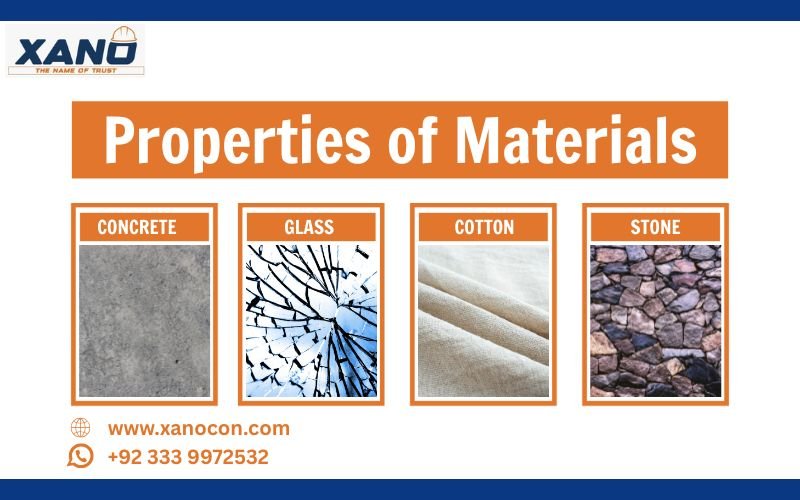
Properties of Building Materials
Here is what to consider when selecting building materials:
- Strength:
Is the material capable of handling high loads?
- Durability:
Will it hold up for a long time without breaking or falling apart?
- Fire Resistance:
Will it melt or burn?
- Weather Resistant:
Can it survive rain, wind and sun?
- Affordable:
Could the project afford it?
- Ease of Use:
How easy is it to cut, mold, or install?
- Insulation:
How good is it at keeping heat and sound in or out?
Why the Right Material Matters
Safety, comfort and cost all depend on choosing the right building material. For instance, concrete is good for firm foundations, but wood is better for beautiful furniture or houses. It’s glass, so it brings in light, but it is insulated, so it keeps energy bills low. The right materials can also help buildings last longer and require less maintenance.
Conclusion
Building materials are the backbone of every construction project. In concrete and steel as well as wood and glass, each material has its own properties and function. Through knowledge of the characteristic and usage of these materials, the builder can produce safe, comfortable and durable buildings. If you’re building a house, a school or a road, picking the right materials is the first step to success.
FAQs
1. Why is bamboo considered a sustainable building material?
Bamboo is hyper-growing, self-regenerating which can grow naturally without irrigation or pesticides. It is also sturdy, bendable and biodegradable which makes it a green alternative to regular wood.
2. What makes recycled steel a good choice for sustainable construction?
Recycled steel means less new mining, and reduced energy use. It can be recycled again and again and it won’t lose strength which is environmentally friendly.
3. How does hempcrete contribute to sustainability in building?
Hempcrete, also made from hemp fibers and lime, does more than sequester CO2: It absorbs more than it emits and offers superior insulation. It is light, fire resistant, and it helps improve indoor air quality.